
Dedicated to Responsible Disposal:
Ensuring Compliance & Safety
In India, the management and treatment of biomedical waste are governed by the Biomedical Waste Management Rules, 2016, under the Ministry of Environment, Forests, and Climate Change (MoEFCC). These rules provide a comprehensive framework for the proper handling, treatment, and disposal of biomedical waste to minimize risks to public health and the environment.
Classification of Biomedical Waste
Effective medical waste management begins with proper classification. The Biomedical Waste Management Rules, 2016, meticulously categorize waste by hazard and origin. This guides precise handling, treatment, and disposal protocols for each type, ensuring comprehensive protection of public health and the environment.
Human and animal Anatomical waste
Cultures and stocks of infectious agents
Waste contaminated with blood and body fluids
Expired or discarded medicines
Chemical waste, including hazardous chemicals
Waste from surgeries or autopsies
Discarded medical devices and equipment
General healthcare waste (non-hazardous waste)
Segregation and Packaging
Biomedical waste must be segregated at the source (healthcare facility, clinic, or hospital) based on its category, and it must be properly stored in color-coded containers that are clearly labeled. Packaging must be secure to prevent leakage, spillage, or contamination.

Yellow bags
for human anatomical waste, soiled waste, blood, and body fluids

Red bags
for contaminated plastic waste, syringes, and surgical instruments
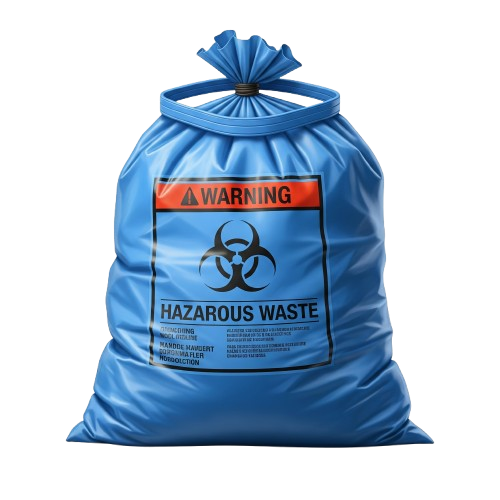
Blue bags
For disposal of glassware such as broken or discarded and contaminated glass including
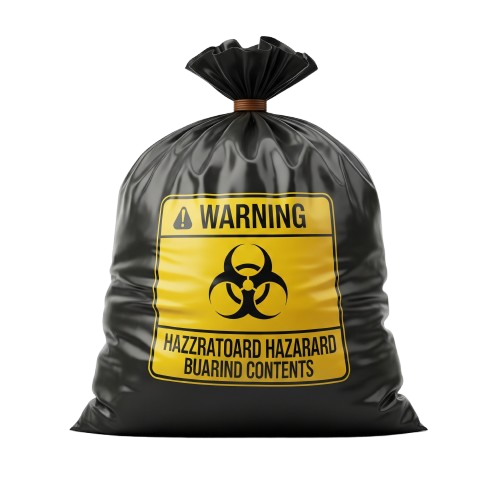
Black bags
used for non-hazardous, non-infectious dry waste such as wrappers, kitchen waste, and general waste
Treatment and Disposal
Treatment companies must ensure that biomedical waste is treated in compliance with the prescribed methods. The common treatment technologies used include:
Autoclaving
High-pressure steam to disinfect waste
Incineration
High-temperature burning of waste, especially for human anatomical waste
Chemical disinfection
Used for certain types of waste like discarded medicines
Microwave treatment
Used to disinfect waste like plastics and dressings
Authorization and
Compliance
Authorization
All healthcare facilities and treatment companies must obtain authorization from the State Pollution Control Boards (SPCBs) or Pollution Control Committees (PCCs) to handle biomedical waste. Treatment companies must also be authorized to receive, treat, and dispose of biomedical waste.
Annual Report
Treatment companies must submit an annual report detailing the amount of biomedical waste handled, treated, and disposed of to the SPCB.
Record Keeping and
Documentation
Waste Management Plan
Treatment companies are required to maintain proper records of the biomedical waste received and treated. This includes details about the waste’s source, quantity, and treatment method
Waste Tracking System
A manifest system should be in place for tracking the movement of waste from healthcare facilities to the treatment company.
Penalties for Non-Compliance
- Treatment companies and healthcare facilities that do not comply with the rules can face fines and penalties under the Environment Protection Act, 1986.
- Non-compliance can lead to suspension or revocation of licenses for treatment facilities.
Infrastructure Requirements
- Secure collection, storage, and disposal systems.
- Adequate treatment technologies to handle various waste categories.
- Regular monitoring and inspections to ensure compliance.
Periodic Monitoring and Inspection
- The State Pollution Control Boards (SPCBs) are responsible for inspecting and monitoring the treatment processes to ensure compliance with the rules. Companies are required to maintain records and provide access to inspectors when necessary.
Extended Producer Responsibility (EPR)
- Manufacturers of medical devices, drugs, and pharmaceuticals are required to ensure the safe disposal or recycling of their products once they are discarded, under the concept of Extended Producer Responsibility (EPR).
The Indispensable Role of Compliance in Biomedical Waste Management
For biomedical waste treatment companies in India, adhering to the Biomedical Waste Management Rules is essential to ensure safe disposal practices, minimize health risks, and meet legal requirements. These regulations help protect healthcare workers, the public, and the environment from the potential dangers associated with improper waste disposal.
Get in touch with us
Save upto 50% by switching to Rudraksh Envirocare
Address
Vill. Bhadog,Teh. Narayangarh Ambala, Haryana 134203
info.rudrakshenvirocare@gmail.com
Phone
+91 99966 68233, +91 98135 77044